In developmentAdvanced Terrain-Landing Autonomous System
ATLAS
Surface power and logistics for the lunar south pole. Generation, storage and distribution that run through the lunar night, and the logistics that move payloads and material across the polar region.
- Domain
- Lunar surface
- Focus
- Power through the night · Surface logistics
- Region
- South polar
354 hours of night.
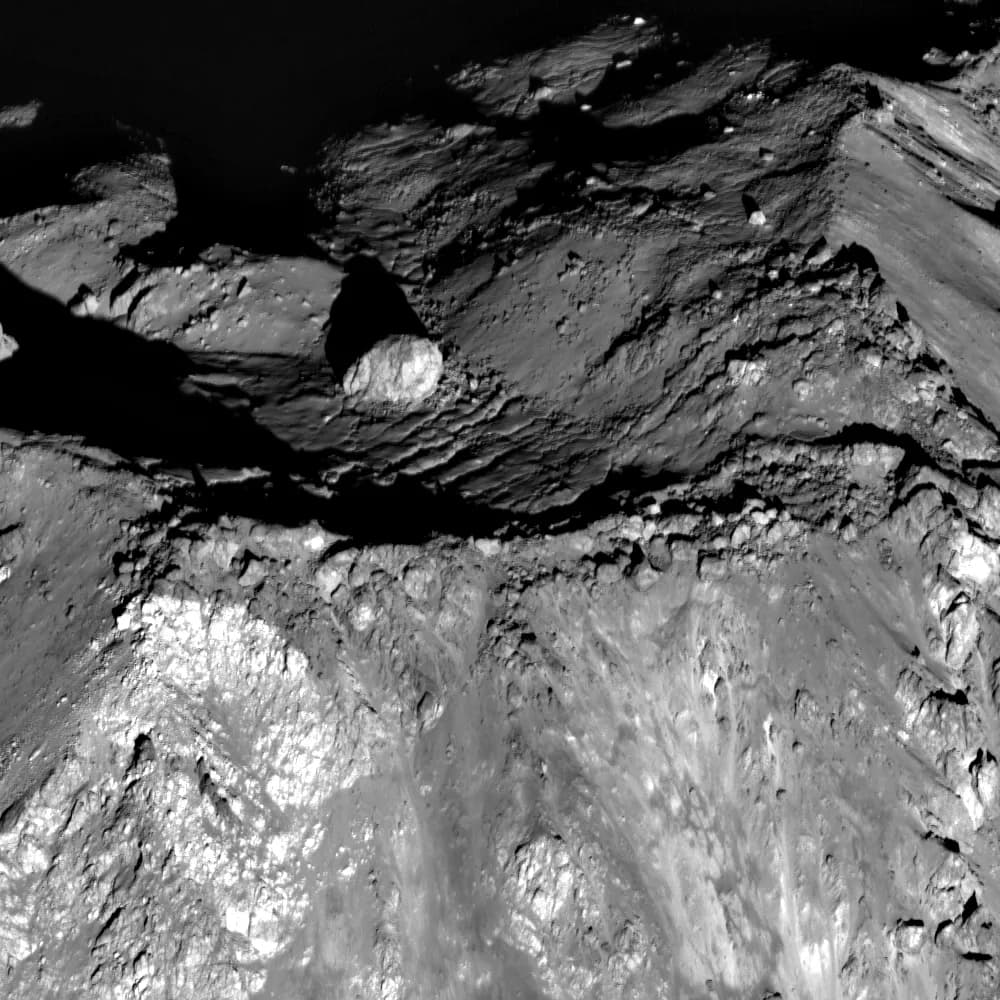
The lunar night lasts about fifteen Earth days. At the equator the surface falls to −173 °C; in the permanently shadowed craters at the poles, below −230 °C. Most landers to date were built for a single lunar day, and the first surface service stations plan for tens of watts through the night. A base needs kilowatts, every night, for years.
Capabilities
Surface power
Generation, storage and distribution sized for continuous operation through the lunar night.
Power interfaces
Standard power exchange at the voltages planned for lunar surface grids, so landers, payloads and infrastructure from different builders connect.
Surface logistics
Cargo versions of the crewed landers are planned to put about 15 tonnes on the surface per landing. ATLAS moves it from the landing zone to where it works.
Assumptions in the open
Designed with the Lunar Virtual Twin, so every power and logistics assumption can be inspected.
Design targets
Targets, not demonstrated results.
- Night design case
- 354-hour lunar night with no solar generation
- Cold design case
- Permanently shadowed terrain below −230 °C
- Region
- Lunar south pole
- Payload interface
- Modular, on a standard mechanical and electrical interface
Works with
Briefings
Technical briefings for program offices and mission partners, under the appropriate agreements.